

A Royalty-Free License is for eligible social uses without collecting royalties, and it does not authorize release to major streaming platforms. A Distribution License permits eligible tracks to be distributed to supported streaming services and collect royalties. When a track is distributed, SoundBreak registers 50% to the creator, 25% to the designated AI Cowriter, and 25% to SoundBreak. The AI Cowriter and SoundBreak portions come from SoundBreak's 50% share under the Terms.
SoundBreak's current FAQ describes the two licenses this way:
Platform availability is plan and track specific. The public homepage and FAQ currently name different social destinations, so check the active release flow before promising or selecting a destination. The Acceptable Use Policy says royalty-free songs stay royalty-free unless they are marked eligible on My Tracks, eligible songs move to a distribution license when you subscribe to Pro Mode, and new Pro Mode songs are licensed for distribution.
SoundBreak's Terms say that, as between you and SoundBreak, the rights and interests in compositions and recordings created by the Platform are equally owned 50/50 at the moment of creation. The Terms also say that SoundBreak has the exclusive right to distribute and exploit the content.
That means "I own my song" needs a precise answer: you receive a 50% share as between you and SoundBreak, but the content remains subject to the license, attribution, and exclusivity rules in the Terms.
When Creator Content is distributed, the Terms say the songwriter or composer credits and royalty split are registered as:
The AI Cowriter's 25% is allocated from SoundBreak's 50% share. Your 50% does not change. The attribution cannot be removed, altered, or omitted when the content is distributed through the supported process.
The Terms say SoundBreak credits your Creator Account with 50% of Net Revenue from exploitation. They define Net Revenue after the listed creation costs, distribution fees, administration expenses, processing costs, licensing or distribution fees, and other reasonable third-party costs and expenses.
SoundBreak's Terms reserve the exclusive right to distribute, publicly perform, license, administer, and otherwise exploit the compositions and recordings. They also say you may not sell your share to standalone sound libraries or sample packs, and that you cannot use or exploit the content without the required licenses, waivers, or permissions.
The FAQ says commercial use is available with the appropriate license. The Terms separately reserve exclusive exploitation rights to SoundBreak and say that downloads are solely for personal, private, non-commercial use. The relationship between those statements should be treated as a legal review item, not simplified on this page. Confirm advertising, client work, licensing to another party, sample packs, sound libraries, or another distributor with SoundBreak before release.
SoundBreak's FAQ says streaming royalties typically take three to five months to process and appear in an account. The Terms describe the contractual accounting schedule for amounts due: payment is due by the later of 90 days after each semi-annual period ending June 30 and December 31, or 45 days after SoundBreak receives statements from its current distributor.
Use three to five months as the FAQ's typical processing estimate, not a guaranteed payment date. The Terms control the contractual accounting obligation. The royalty dashboard is available after sign-in at SoundBreak Royalties.
Before submitting a track, confirm:
For a question about a specific track or commercial use, contact SoundBreak support before distributing it.
Do I own the master recording rights?
SoundBreak's FAQ says that, as between you and SoundBreak, each party owns 50% of the composition and recording rights, while the distributed royalty registration is 50% to you, 25% to the AI Cowriter, and 25% to SoundBreak. The Terms contain the fuller ownership and exclusivity language.
Can I change the songwriter or composer credits after distribution?
The FAQ says the credits and 50/25/25 split are locked once a track is submitted for distribution. The Acceptable Use Policy also says distribution metadata must preserve the 50% / 25% / 25% attribution. Check the credits before submitting.
Can I use a Royalty-Free track on Spotify or Apple Music?
Not according to the current FAQ. It says Royalty-Free tracks are not released to major streaming platforms. The Acceptable Use Policy adds that royalty-free songs stay royalty-free unless they are marked eligible on My Tracks, eligible songs move to a Distribution License when you subscribe to Pro Mode, and new Pro Mode songs are licensed for distribution.
To make a SoundBreak song, choose an AI Cowriter or Solo Write, start with a song idea, lyrics, or a musical prompt, and revise the generated result. You can share the finished track on SoundBreak Radio or with friends. If the track is eligible for a Distribution License, SoundBreak's built-in release flow can send it to supported streaming and social destinations; the license and plan determine where it can go and how royalties work.
Open SoundBreak's writing flow and choose an AI Cowriter, or choose Solo Write if you want to define the style yourself. You can then:
SoundBreak's current upload flow says you may upload MP3, MP4, or M4A files up to 10 MB, and that you may upload only music you created yourself as the artist or creator. Purchased, downloaded, licensed, or other third-party music does not qualify as a style reference, even if you own a copy. The Acceptable Use Policy also prohibits uploading or using material you do not have the legal right to use.
Song generation is a starting point, not the release decision. SoundBreak's FAQ says you can continue the conversation with your AI Cowriter to revise the lyrics, style, tempo, or other elements. Use that step to check the words, credits, arrangement, and any material you supplied before choosing a destination.
You can submit a track to SoundBreak Radio so the community can listen to it, or share the track with friends. SoundBreak says Radio ranks songs using engagement such as likes and listens, and that popular tracks may be sent to the relevant AI Cowriter's team.
The writing flow warns that a Radio submission locks the track name, genre, and version choice for that submission. Check those fields before you submit.
SoundBreak's FAQ describes two broad paths:
Platform availability is plan and track specific. The public homepage and FAQ currently name different social destinations, so check the active release flow before promising or selecting a destination. The Acceptable Use Policy says royalty-free songs stay royalty-free unless they are marked eligible on My Tracks, eligible songs move to a distribution license when you subscribe to Pro Mode, and new Pro Mode songs are licensed for distribution.
For the ownership and royalty rules behind these licenses, read SoundBreak's license and royalty guide.
Before you submit a track, make sure you have the rights to any lyrics, audio, artwork, or other material you supplied. SoundBreak's Terms make you responsible for third-party permissions, and the Acceptable Use Policy prohibits uploading or using material you do not have the legal right to use.
The Terms also say that distribution registers the 50/25/25 attribution and that you cannot remove or alter it. The Privacy Policy says your name and co-writer attribution may be included in metadata sent to distributors and streaming platforms. Read the Terms before distributing a track, especially if your use case involves a commercial product, a separate license, a sample pack, or another distributor.
For a specific account, billing, distribution, or rights question, use SoundBreak's contact page. Include the track or session link and describe the destination you want to use.
Can I use a SoundBreak song commercially?
Commercial use depends on the applicable license and the Terms. SoundBreak's FAQ says commercial use is available with the appropriate license, but the Terms also reserve exclusive exploitation rights to SoundBreak and include a personal, private, non-commercial download limitation. Do not promise a commercial use case from this page alone. Confirm advertising, client work, licensing to another party, sample packs, sound libraries, or other edge cases with SoundBreak first.
Can I distribute a SoundBreak track through another distributor?
The current FAQ says distribution goes through SoundBreak's distribution partner and that releasing the same track through a separate distributor is not supported. Check the current release flow before making distribution arrangements.
Can I upload a finished version of my song?
Yes. SoundBreak's FAQ says you can export stems, work on the track in your own studio, and upload your finished version back to SoundBreak for possible distribution.
A SoundBreak AI Cowriter is an AI songwriting partner built around the style, genre preferences, and writing characteristics of a participating artist. You choose a Cowriter, provide a prompt, lyrics, or a musical idea, and use the generated material to build a song. The Cowriter is not the artist, does not reproduce the artist's voice, and does not mean the artist personally wrote or performed the resulting track.
SoundBreak describes each AI Cowriter as a collaborative partner with default musical and writing characteristics. Those characteristics can influence lyrics, hooks, structure, genre, and other creative choices. The resulting song does not use the artist's voice as a recording of the artist. SoundBreak's FAQ says the AI version is a tool inspired by the artist's songwriting style, not a replica of the artist.
That distinction matters: the artist's participation gives the Cowriter its creative direction, but the session still produces a new track that you shape and revise.
You can start with a basic idea, a mood, a story, your own lyrics, or a more detailed musical prompt. SoundBreak's writing flow also lets you override a Cowriter's default style by specifying vocals, genre, instruments, production, or other musical details. You can upload a song you created yourself as the artist or creator as a style reference. The upload flow specifically says purchased, downloaded, licensed, or other third-party music does not qualify, and SoundBreak's Acceptable Use Policy prohibits material you do not have the legal right to use.
Start a writing session or read the full technology FAQ.
SoundBreak's AI Cowriters are participating artists who opt in to be featured on the platform. The FAQ says they receive credit and compensation when users create songs with them. The artist can also define parts of the Cowriter's presentation and default creative characteristics.
The safest way to describe the result is an AI-assisted collaboration inspired by a participating artist's songwriting approach. SoundBreak's Acceptable Use Policy prohibits presenting the AI Artist as a human performer or falsely claiming affiliation, endorsement, authorship, or identity. Do not describe a generated track as an artist recording, an artist endorsement, or a song personally written by that artist unless the artist has separately done that work.
SoundBreak's FAQ distinguishes the artist you choose as an AI Cowriter from the music used to train generation technology. It says SoundBreak uses technology partners whose models are trained on materials those partners are authorized to use under their terms, partner agreements, and applicable law. That can include licensed catalogs. Those training rightsholders are separate from AI Cowriters unless they also opt in as collaborators on SoundBreak.
This separation keeps two questions clear: who you choose to collaborate with in the product, and what materials a technology partner is authorized to use for model training.
SoundBreak's Privacy Policy says AI music generation partners may process the prompts, lyrics, style descriptions, reference audio, and generation settings you submit to create audio and related creative outputs and to operate, secure, and enforce safety policies. The Terms say SoundBreak may store and use Creator Content to operate the platform, including playback, Radio, distribution, support, and account features, but does not use Creator Content to train music-generation models.
You can continue the conversation with the Cowriter to revise lyrics, style, tempo, or other parts of the song. When the song is ready, you can share it on SoundBreak Radio, send it to friends, or check whether it is eligible for a SoundBreak distribution license.
Learn how to make, share, and distribute a song.
Will the final song sound like the artist?
The songwriting approach may reflect the Cowriter's style, but SoundBreak says the result does not reproduce the artist's voice. You create the final sound, or work with a producer or vocalist.
Can I use my own lyrics or ideas?
Yes. You can provide your own lyrics, themes, or musical direction and use the Cowriter to develop them. Only upload music you created yourself and have the rights to use.
How are artists compensated?
SoundBreak says AI Cowriters receive credit and compensation for their participation. The current FAQ and Terms contain the current compensation and royalty language.

Music discovery is broken.
Most streaming platforms push songs after they’ve already taken off. But what if you could discover tracks before they hit Spotify—and actually help decide which ones get released?
That’s exactly what’s happening on SoundBreak.
Below are 5 unreleased songs from real artists and songwriters. These tracks are still in the decision phase, meaning your vote directly impacts what gets released next.
Genre: Pop/Rock
This track feels optimistic right out of the gate. There’s a forward momentum to it that makes it instantly replayable, with a hook that feels built for wide appeal.
👉 Should this song be released? Vote now on SoundBreak.
Genre: Indie Pop
A strong sense of place and personality drives this track. It leans into storytelling in a way that pulls you in quickly, making it feel both personal and memorable.
👉 Listen and vote to help decide its future.
Genre: Alternative Country
This one brings a more immediate energy. It has the kind of structure and pacing that could easily translate to mainstream traction with the right push.
👉 Your vote could help push this into the spotlight.
Genre: Motown
A more intimate and reflective track, this one stands out for its tone and delivery. It’s the kind of song that connects more deeply on repeat listens.
👉 Vote now if you think this deserves a full release.
Genre: Country Pop
There’s a confidence to this track that makes it feel like a sleeper hit. It builds in a way that rewards a full listen—and sticks with you after.
👉 Help decide if this one gets its moment.
SoundBreak flips the traditional music model.
Instead of artists guessing what might work, fans can:
For artists, that means:
For listeners, it means:
Want to hear more unreleased songs?
👉 Head over to SoundBreak Radio to discover new music, vote on your favorites, and help shape what comes next.

AI music generation is evolving at an incredible pace. Platforms like Suno, Udio, and ElevenLabs have demonstrated just how quickly artificial intelligence can produce songs, vocals, and instrumentals from simple prompts. Type a few words into a text box and, within seconds, a complete track appears—lyrics, melody, and production included. For many creators, this feels like magic. But there’s a deeper question that the AI music industry still hasn’t fully answered:
Where do artists fit into this future?
Most AI songwriting platforms today are designed around generation, not collaboration. The result is a rapidly growing ecosystem of tools that can create music—but often without any real connection to the artists whose styles inspired it.
As AI continues transforming music creation, the platforms that succeed long-term may not be the ones that simply generate the most songs. Instead, they may be the ones that rethink how AI can work with artists rather than around them.
The last few years have seen an explosion of AI music tools. Platforms like Suno allow users to generate complete songs from text prompts. Describe a genre, mood, and lyrical theme, and the AI produces a fully arranged track with vocals. Similarly, Udio focuses on generating high-quality songs through prompts and iterative editing. These systems are remarkably powerful and allow anyone—even someone with no musical training—to create music instantly. Other platforms are exploring adjacent areas of AI audio. For example, ElevenLabs became widely known for its voice synthesis technology and has recently expanded into AI music generation as well. Across the industry, the goal has largely been the same:
Make music creation faster, easier, and more accessible.
And in many ways, that goal has been achieved. But there is one element that many platforms still treat as an afterthought.
The artist.
Most AI music generation platforms are built around a simple workflow:
This approach is powerful for rapid content creation. It allows creators to generate dozens—or even hundreds—of songs quickly.
However, it also creates a strange dynamic.
The music often sounds inspired by existing artists, yet the artists themselves are rarely involved.
For many musicians and songwriters, this raises important concerns:
These questions have become increasingly important as AI music technology continues to improve.
And they point toward a different vision for how AI could work in the music industry.
Instead of treating artists as sources of inspiration that AI models learn from indirectly, a new approach is emerging:
AI artist models built with artists themselves.
In this framework, artists become participants in the AI ecosystem rather than passive influences.
Imagine a platform where:
Rather than replacing musicians, AI becomes a way to expand their creative reach.
An artist who might normally write a handful of songs per year could suddenly be connected to thousands of fans experimenting with ideas inspired by their style.
The result is not fewer songs.
It’s more songs—and more collaboration.
Historically, technology has often expanded artistic output rather than eliminating artists.
Recording studios allowed musicians to create albums at scale.
Digital audio workstations made it easier for independent artists to produce music.
Streaming platforms enabled global distribution.
AI may represent the next step in that evolution.
Instead of replacing songwriters, AI tools could allow them to:
In other words, AI can act as a creative multiplier.
A songwriter who once had time to write ten songs a year might suddenly have the ability to explore hundreds of musical ideas.
Fans could participate in the process, turning songwriting into a more interactive experience.
And artists could identify the most promising ideas emerging from their communities.
The current generation of AI music platforms focuses heavily on generation speed.
That makes sense in the early stages of a technology cycle.
But as AI music tools mature, the platforms that succeed long-term may focus on something deeper:
creative ecosystems rather than simple generators.
The future of AI songwriting platforms may include:
Instead of simply producing music faster, these systems could help build entirely new creative networks around artists and their audiences.
Despite all the excitement around AI music generation, one truth remains unchanged:
Artists are still at the center of music culture.
Fans follow artists not just because of the songs they create, but because of the stories, identities, and communities that surround them.
AI can generate music.
But it cannot replace the human connection that listeners feel toward the artists they love.
That’s why the most sustainable AI music platforms may not be the ones that remove artists from the process—but the ones that bring them back into it.
The biggest opportunity in AI music isn’t replacing artists.
It’s helping them scale.
Imagine a world where:
AI can make that possible.
Instead of reducing the role of artists, it can amplify it.
The platforms that embrace this idea may define the next era of music creation.
Because the future of AI music isn’t about removing the artist.
It’s about giving them more ways to create than ever before.
When comparing Suno and SoundBreak.ai, it’s important to understand that the two platforms focus on different stages of the music creation process.
Suno is one of the most popular AI music generators, allowing users to create complete songs—including vocals and lyrics—simply by entering text prompts. The platform excels at fast music generation, producing songs in seconds across nearly any genre.
SoundBreak.ai takes a different approach. Instead of focusing only on generation, SoundBreak is designed for AI-assisted songwriting and music releases. The platform helps creators develop songs using licensed artist-style AI models and distribute those songs to major streaming platforms like Spotify, Apple Music, YouTube Music, and TikTok.
Another key difference is the ecosystem around the music. Songs created on SoundBreak can be submitted to SoundBreak Radio, where listeners vote on tracks and top songs may be shared with participating artists and their teams.
Bottom line:
Suno is built for fast AI music generation.
SoundBreak.ai is built for songwriting, distribution, and music discovery.
Suno is widely known for its text-to-music generation model, which allows users to generate complete songs from simple prompts.
Users can type something like:
“Upbeat indie pop song with female vocals about summer”
Within seconds, the system produces a fully arranged track with vocals, lyrics, and instrumentation.
This approach makes Suno incredibly accessible for:
content creators
marketers
hobbyist musicians
social media creators
The emphasis is on speed and ease of use.
SoundBreak.ai focuses on AI-assisted songwriting workflows rather than instant prompt-based generation.
Creators collaborate with AI trained on licensed artist styles to explore song ideas and develop original music. Instead of generating dozens of disposable tracks quickly, the platform encourages users to develop songs they intend to release publicly.
This makes SoundBreak particularly appealing to:
songwriters
musicians
creators experimenting with AI music tools
fans collaborating with artist-style AI models
One of the biggest differences between Suno and SoundBreak.ai is what happens after a song is created.
Suno focuses primarily on music generation.
Users can generate songs quickly and download them for personal use or content creation. However, creators who want to release music on streaming platforms typically need to handle distribution separately.
Because of ongoing industry discussions around AI music training data, some creators also worry about long-term licensing clarity when releasing AI-generated tracks commercially.
SoundBreak is designed for creators who want to create and release songs.
Music developed on SoundBreak can be distributed through standard music distribution channels to platforms including:
Spotify
Apple Music
YouTube Music
TikTok
The platform also allows creators to submit songs to SoundBreak Radio, where the community listens and votes on tracks.
Top-performing songs may be shared with participating artists and their teams, creating a feedback loop between fans, creators, and musicians.
Pricing is one area where Suno has a clear advantage.
Suno offers a low-cost subscription model, including:
a free plan with limited song generation
paid plans starting around $10/month
higher tiers for faster generation and commercial use
Because the platform focuses on generation, this pricing model works well for users producing large volumes of songs quickly.
SoundBreak uses a subscription-based model designed for creators who want ongoing access to AI songwriting tools and music distribution capabilities.
While this may cost more than basic music generation platforms, SoundBreak focuses on the full lifecycle of music creation, including:
songwriting tools
licensed AI models
distribution to streaming platforms
discovery through SoundBreak Radio
Designed for AI-assisted songwriting
Supports music distribution to streaming platforms
Uses licensed artist-style AI models
Includes music discovery through SoundBreak Radio
Encourages development of songs intended for public release
Not designed for instant prompt-based generation
Slower workflow than rapid AI music generators
Extremely fast text-to-music generation
Generates songs with vocals and lyrics
Simple interface accessible to beginners
Lower entry-level pricing
Limited focus on music distribution
Less control over songwriting workflows
Songs are typically generated rather than developed over time
SoundBreak is an ideal Suno alternative for creators who want to:
develop original songs with AI assistance from the style of real artists and songwriters
release music on streaming platforms quickly and easily
experiment with artist-style AI collaboration
participate in music discovery through SoundBreak Radio
Typical users include:
songwriters
musicians
creators exploring AI music tools
Suno is best suited for creators who need fast music generation.
Common use cases include:
social media content
YouTube background music
AI music experimentation
rapid idea prototyping
Both SoundBreak.ai and Suno are shaping the future of AI music creation—but they serve very different creative goals.
Suno excels at instant music generation, making it ideal for creators who need quick songs for content or experimentation.
SoundBreak.ai focuses on AI-assisted songwriting, music releases, and artist discovery, helping creators develop songs they can distribute and potentially share with real artists.
If your goal is generating music quickly, Suno remains one of the best AI tools available.
If your goal is creating songs and releasing them publicly, SoundBreak.ai offers a more complete platform.
When comparing SoundBreak.ai vs Suno, the difference comes down to the role AI plays in your creative process.
Suno prioritizes generation speed
SoundBreak prioritizes songwriting and music releases
Understanding that distinction makes it easier to choose the right platform depending on whether your priority is fast content music or long-term music creation.

If you're comparing SoundBreak.ai vs the ElevenLabs music generator, you're looking at two powerful AI platforms that approach music creation in very different ways.
ElevenLabs Music focuses on prompt-based music generation, allowing users to create full songs or instrumentals from text prompts. The platform is designed for content creators who want to quickly generate music for videos, podcasts, or other media projects.
SoundBreak.ai, on the other hand, focuses on AI-assisted songwriting and music creation. Instead of simply generating songs from prompts, SoundBreak helps creators develop music ideas and distribute their songs to major streaming platforms like Spotify, Apple Music, and YouTube Music.
Another key difference is cost. ElevenLabs Music typically charges around $0.50 per minute of generated music, which can add up quickly if you're producing many songs. SoundBreak uses a subscription model designed for creators who want to generate and release music more frequently.
Bottom line:
Choose ElevenLabs Music if you want fast prompt-based music generation. Choose SoundBreak.ai if you want a platform designed for songwriting, music releases, and artist discovery.
The biggest difference between SoundBreak.ai and ElevenLabs Music lies in how songs are created.
ElevenLabs recently introduced its AI music generator, which allows users to create songs using natural language prompts. Users can describe the type of song they want, and the AI generates a full track.
Typical prompt inputs might include:
genre
tempo
style
lyrical themes
mood
The system then produces a song with vocals and instrumentation that follows those instructions.
This approach makes ElevenLabs ideal for creators who need quick soundtrack generation or experimental AI music outputs.
Common use cases include:
YouTube background music
podcast intros
social media content
marketing videos
SoundBreak.ai takes a different approach by focusing on AI-assisted songwriting workflows.
Rather than generating songs purely from prompts, SoundBreak helps creators collaborate with AI trained on licensed artist styles to develop song ideas and experiment with music creation.
The platform is designed for creators who want to:
develop original songs
explore AI songwriting workflows
release music publicly
This makes SoundBreak more appealing for musicians and creators who want to build songs rather than just generate them instantly.
Another important distinction between the two platforms is the type of music they are designed to produce.
ElevenLabs Music is optimized for fast music generation. Users can quickly create songs or instrumentals for content projects.
Because of this, the platform is commonly used for:
video soundtracks
background music
AI music experimentation
developer integrations
The emphasis is on speed and flexibility.
SoundBreak is built around song creation and music releases.
Creators using SoundBreak can develop songs and distribute them to major streaming platforms through standard distribution channels, including:
Spotify
Apple Music
YouTube Music
TikTok
SoundBreak also includes SoundBreak Radio, where creators can submit songs for community listening and voting. Top-performing songs may be shared with participating artists and their teams.
This creates a full ecosystem for creating, releasing, and discovering music.
Pricing is one of the biggest differences between the platforms.
ElevenLabs uses a usage-based pricing model.
Music generation typically costs around:
$0.50 per minute of generated music
This means the cost can increase quickly depending on how many songs you generate.
Example costs might look like this:
Songs Generated | Estimated Cost |
|---|---|
5 songs (3 min each) | ~$7.50 |
20 songs | ~$30 |
100 songs | ~$150 |
For creators producing music frequently, this pricing structure can become expensive over time.
SoundBreak uses a subscription-based pricing model, providing ongoing access to its AI songwriting tools and music creation features.
Because pricing is not tied directly to song length or generation time, the platform can be more cost-effective for creators who plan to generate and release music regularly.
Designed for AI-assisted songwriting
Supports music distribution to streaming platforms
Allows creators to develop original songs
Includes discovery opportunities through SoundBreak Radio
Uses licensed artist-style AI models
Not designed for instant prompt-based music generation
Focuses on songwriting rather than fast background music creation
Fast prompt-based music generation
Supports songs with vocals and instrumentals
Strong developer API ecosystem
Useful for rapid soundtrack creation
Usage-based pricing can become expensive
Primarily focused on generation rather than music releases
Does not provide music distribution to streaming platforms
SoundBreak is ideal for creators who want to:
experiment with AI-assisted songwriting
develop complete songs
release music to streaming platforms
participate in music discovery through SoundBreak Radio
Typical users include:
musicians
songwriters
creators experimenting with AI music tools
ElevenLabs is best suited for creators who need fast music generation from prompts.
Common use cases include:
YouTube soundtracks
podcast background music
AI-generated music experiments
video content creation
Both SoundBreak.ai and ElevenLabs Music represent powerful innovations in AI music technology, but they focus on different creative workflows.
ElevenLabs excels at prompt-based music generation, making it useful for creators who need quick soundtracks or background music.
SoundBreak focuses on AI-assisted songwriting and music distribution, giving creators the tools to develop songs and release them to streaming platforms.
If your goal is quick AI music generation, ElevenLabs Music may be the better choice. If you want to create songs and release them publicly, SoundBreak.ai provides a more complete music platform.
When comparing SoundBreak.ai vs the ElevenLabs music generator, the difference comes down to how you want to use AI in your creative process.
ElevenLabs focuses on prompt-based music generation
SoundBreak focuses on songwriting and music releases
Understanding that distinction helps creators choose the right platform depending on whether their priority is fast content music or full song creation.
If you're searching for a Soundraw alternative or comparing AI music platforms, it's important to understand that SoundBreak.ai and Soundraw are designed for very different types of creators.
SoundBreak.ai is an AI-assisted songwriting platform where creators collaborate with AI trained on licensed artist styles to help develop original songs. The platform focuses on songwriting, music creation, and distributing songs to streaming platforms like Spotify, Apple Music, and YouTube Music.
Soundraw, on the other hand, is built primarily for generating royalty-free background music. It allows users to quickly create instrumental tracks by selecting genres, moods, and instruments from preset options.
The biggest difference comes down to workflow:
Choose
The core difference between SoundBreak.ai and Soundraw lies in how music is created.
SoundBreak.ai focuses on AI-assisted songwriting. Users collaborate with AI models trained on licensed artist styles to help develop musical ideas, lyrics, melodies, and arrangements.
Instead of simply generating background tracks, the platform is designed to help creators build full songs and explore new songwriting workflows using AI.
This makes SoundBreak particularly appealing to:
Soundraw takes a more structured approach to AI music generation.
Users generate music by selecting parameters such as:
The platform then produces instrumental tracks that can be adjusted using built-in editing controls.
Soundraw is widely used for background music generation for video content, podcasts, and commercial media projects.
Both platforms offer a variety of musical styles, but the type of music they generate differs significantly.
Because SoundBreak focuses on songwriting, it helps creators produce structured songs with melodies and arrangements influenced by licensed artist styles.
Users can experiment with different musical directions and refine songs as part of the creative process.
Soundraw specializes in instrumental background music across genres such as:
The platform allows users to generate multiple variations quickly, making it ideal for creators who need background music for content production.
One of the biggest differences between SoundBreak.ai and Soundraw is what happens after the music is created.
SoundBreak allows creators to release songs to streaming platforms through standard music distribution channels, including:
Creators can also submit songs to SoundBreak Radio, where the community listens and votes on tracks. Top songs may be shared with participating artists and their teams.
This creates a unique ecosystem for creating, releasing, and discovering new music.
Soundraw focuses on royalty-free licensing for media production.
Music created on Soundraw is typically used in:
Rather than releasing songs as standalone music tracks.
Pricing structures reflect the different audiences each platform targets.
Soundraw uses a subscription model with plans that provide unlimited music generation and royalty-free licensing for commercial use.
This model works well for content creators who need frequent background music for media projects.
SoundBreak operates on a subscription-based model that provides access to its AI songwriting tools and music creation features.
The platform is designed for creators who want ongoing access to AI-assisted songwriting workflows and music distribution capabilities.
Both SoundBreak.ai and Soundraw represent different directions in the rapidly evolving AI music landscape.
SoundBreak.ai focuses on AI-assisted songwriting, music creation, and distribution, helping creators develop songs and release them to streaming platforms.
Soundraw focuses on royalty-free background music generation for videos, marketing content, and commercial media projects.
If your goal is writing songs and releasing music, SoundBreak.ai provides the more suitable platform. If you need fast background music for content production, Soundraw is designed specifically for that use case.
When comparing SoundBreak.ai vs Soundraw, the fundamental difference comes down to creative goals:
Understanding that distinction makes it easier to choose the right AI music platform for your creative workflow.
Finding a Mubert alternative or comparing AI music platforms like SoundBreak.ai vs Mubert involves understanding their distinct purposes. SoundBreak.ai provides an AI-assisted songwriting platform, enabling creators to collaborate with AI trained on licensed artist styles for original song development. It focuses on songwriting, music creation, and distributing songs to major streaming platforms like Spotify, Apple Music, and YouTube Music.
Mubert specializes in AI-generated background music, creating continuous instrumental tracks using algorithmic composition and a vast library of loops and samples.
The fundamental difference is in their use cases:
Pricing varies as well. Mubert offers subscription plans starting at $14 per month, while SoundBreak.ai provides a subscription-based model for ongoing access to AI songwriting tools and music distribution capabilities.
Bottom line:
Choose SoundBreak.ai to create original songs with AI assistance and distribute them to streaming platforms. Opt for Mubert if you need fast, royalty-free background music for content production.
When comparing SoundBreak.ai against Mubert, differences become clear across several areas impacting how creators use AI for music creation.
The primary distinction between SoundBreak.ai and Mubert lies in how music is created.
SoundBreak.ai focuses on AI-assisted songwriting. Users engage with AI models trained on licensed artist styles to develop song ideas, melodies, lyrics, and arrangements. Instead of generating endless background tracks, SoundBreak.ai enables creators to build full songs and experiment with new songwriting workflows using AI.
This approach appeals to:
Mubert employs a different approach to AI music, generating continuous background music. The platform uses algorithmic composition along with a large library of loops and samples created by musicians, dynamically arranging them to produce instrumental tracks in real-time.
This makes Mubert especially useful for creators needing music for:
Both platforms offer diverse musical styles, but the type of music they generate differs significantly.
SoundBreak.ai is dedicated to songwriting, helping creators produce structured songs with melodies, arrangements, and stylistic influences inspired by licensed artist styles. Users can iterate on their ideas, refine songs, and develop complete musical compositions.
Mubert specializes in instrumental background music across genres such as electronic, ambient, lo-fi, cinematic, and hip-hop. Its system quickly generates numerous instrumental tracks, making it well-suited for creators needing background audio for media content.
Both platforms aim to simplify music creation, yet their workflows differ.
SoundBreak offers a workspace centered around creative experimentation and songwriting. Users interact with AI tools to develop song ideas and refine their music over time, best suited for those wanting active participation in the songwriting process.
Mubert emphasizes speed and automation. Users can quickly generate background tracks by selecting moods, genres, or use cases. This streamlined workflow efficiently serves creators needing immediate music for video production or streaming content.
One of the biggest differences between SoundBreak.ai and Mubert is the post-creation process.
SoundBreak.ai is designed for creators wishing to release music publicly. Songs created on the platform can be distributed through standard music distribution channels to major streaming platforms like Spotify, Apple Music, YouTube Music, and TikTok. Creators can also submit songs to SoundBreak Radio, where the community can listen and vote on tracks, creating a feedback loop between fans, creators, and artists.
Mubert focuses on royalty-free music licensing. Tracks generated by the platform are typically used in videos, apps, podcasts, and other media projects, allowing creators to use background music without copyright complications. Mubert is generally used for content production rather than releasing songs as standalone music tracks.
Pricing models for SoundBreak.ai and Mubert reflect their different audiences.
Mubert offers several subscription tiers, including a free plan with limited downloads. Paid plans start around $14 per month, with higher tiers offering more downloads and commercial licensing. This pricing model benefits creators who frequently need background music.
SoundBreak operates on a subscription-based model providing access to AI-assisted songwriting tools and music creation features. Pricing tiers vary depending on platform usage and capabilities, suiting creators seeking ongoing access to AI music creation and distribution tools.
SoundBreak works best for creators wanting to experiment with AI-assisted songwriting and develop original songs. Typical users include:
Mubert is ideal for creators needing background music quickly and at scale. Common use cases include:
Both SoundBreak.ai and Mubert represent different directions in the rapidly evolving world of AI-generated music. SoundBreak.ai focuses on AI-assisted songwriting, music creation, and distribution, allowing users to develop songs and release them through streaming platforms. Mubert specializes in generating instrumental background music for media projects and applications. If your goal is writing songs and exploring creative AI workflows, SoundBreak.ai offers a more suitable environment. If you need instant background music for content production, Mubert is designed specifically for that purpose.
When comparing SoundBreak.ai vs Mubert, the key distinction is creative goals:
Understanding this difference simplifies choosing the right platform for your creative workflow involving AI.
We thoroughly examined AI music removal on Spotify to help you make an informed decision. The music industry hit a tipping point in 2024 when Spotify alone purged over 7.5 million AI-generated tracks from its platform. What started as a trickle of removals became a flood, catching thousands of creators off guard and triggering a massive rethink of how artificial intelligence fits into mainstream music distribution.
Here's what happened: streaming platforms noticed patterns. Generic tracks with suspicious play counts. Albums uploaded in bulk. Songs that mimicked popular artists without proper licensing. The response was swift and unforgiving—AI music removal on Spotify policies evolved from vague guidelines to automated detection systems that flag and delete content within hours of upload.
The problem isn't AI itself. The problem is spam, impersonation, and rights violations. When someone creates a song using an AI voice model trained on copyrighted recordings without permission, platforms like Apple Music and YouTube have legal obligations to act. Their AI music platform policies frameworks now explicitly target "artificial streaming" and "misleading metadata"—industry code for AI slop that floods catalogs with low-effort content.
This created an impossible situation for legitimate creators who wanted to experiment with AI tools. Traditional distribution channels like DistroKid, TuneCore started adding friction—manual review processes, strict metadata requirements, and blanket rejections of anything flagged as "AI-generated." The message was clear: AI music wasn't welcome in the mainstream ecosystem.
But one
The crackdown isn't theoretical—it's happening right now across every major platform. Apple Music has already implemented AI content detection systems that flag synthetic tracks before they even hit their catalog. YouTube has tightened its monetization policies, requiring explicit disclosure for AI-generated content and reserving the right to demonetize tracks that don't meet authenticity standards. Amazon Music follows similar protocols, while Tidal and other streaming services have joined the chorus of platforms scrutinizing AI music uploads.
The core issue driving these AI music streaming policy isn't the technology itself—it's how it's been abused. Platforms are dealing with massive volumes of content designed solely to game streaming numbers, not to create genuine artistic value. When distributors upload thousands of tracks under fabricated artist names, platforms lose trust in AI music wholesale.
This is where SoundBreak's approach fundamentally differs. Rather than treating AI as a mass-production tool for generic content, the SoundBreak AI music solution operates on a licensing model where real artists participate in and benefit from the AI creation process. By partnering with established musicians to train AI models on their legitimate catalogs, SoundBreak creates a transparent chain of attribution that platforms can verify and trust.
The difference becomes clear: platforms aren't removing AI music categorically—they're removing AI music that operates outside established creative and commercial frameworks.
The mass purge of 75 million tracks wasn't random—it exposed three critical AI song distribution issues that creators consistently overlook. Spotify's algorithm targets accounts exhibiting specific patterns: rapid-fire uploads of dozens of tracks per day, identical musical structures across multiple "artists," and coordinated streaming activity from bot networks. These behaviors scream automated content farms, not legitimate artists.
Here's the reality check most creators miss: platforms can't actually detect AI-generated audio with perfect accuracy. What they can detect is behavior that violates their terms—copyright infringement, fake engagement metrics, and spam-like activity. A single AI-generated track uploaded by a human creator with proper licensing rarely triggers removal. It's the industrialized approach that platforms target.
The enforcement reveals what actually matters in AI music distribution rules: provenance and proper licensing trump the technology used to create the music. Spotify explicitly states they're not anti-AI—they're anti-fraud.
The takeaway? Platforms aren't banning AI music—they're banning AI music abuse. Understanding this distinction is critical before we examine how Apple Music approaches the same challenge.
Apple Music has taken the most aggressive stance against AI-generated content, implementing detection systems before competitors even acknowledged the problem. Their platform automatically flags tracks suspected of AI generation—a stark contrast to Spotify's reactive cleanup approach that removed tracks after they'd already accumulated millions of streams.
discussions, Spotify's 75-million-track purge, and Apple simply blocks suspicious uploads during the submission process.
What separates SoundBreak from problematic AI distribution? Transparency and licensing. While most AI music fails Apple's screening because it can't prove rights ownership, SoundBreak's model ensures every track has documented permission from the artists whose voices informed the AI. That paper trail satisfies platform requirements that remain deliberately vague for everyone else.
SoundBreak represents a fundamentally different approach to AI-generated music—one that sidesteps the distribution problems plaguing creators on mainstream platforms. While concerns about AI music removal on Apple policies and questions like "is AI music banned on Apple Music?" dominate creator forums, SoundBreak operates outside this contentious ecosystem entirely.
The platform launched with a unique value proposition: properly licensed AI models from actual artists. Better Place Records founder Kevin Griffin created the service specifically to solve the authenticity crisis that triggered mass removals elsewhere. Instead of anonymous AI slop flooding distribution channels, SoundBreak facilitates collaboration between creators and artists who've explicitly opted in.
What makes this model distribution-proof? The platform doesn't rely on Spotify, Apple Music, or YouTube's approval. SoundBreak hosts and distributes content directly, eliminating the gatekeeper problem entirely. Creators aren't subject to sudden policy shifts or algorithmic detection systems flagging their work as spam.
The licensing framework addresses the core issue that platforms use to justify removals: consent and attribution. When Kevin Griffin launched SoundBreak, he emphasized working directly with artists to create official AI models, ensuring creators use voices that come with clear legal rights. This isn't a loophole—it's a legitimate business model that respects both artists and creators while avoiding the compliance minefield that's destroying traditional distribution channels.
SoundBreak has fundamentally restructured the relationship between AI music and artists by operating outside traditional distribution channels entirely. While platforms like Spotify and Apple Music navigate complex AI music removal policy, SoundBreak eliminates the distribution problem altogether by keeping AI-generated content within its own ecosystem.
The platform's architecture creates what amounts to a walled garden for AI music. Artists license their styles directly to SoundBreak, users create music using those licensed models, and everything stays within the platform's boundaries. There's no uploading to Spotify, no concerns about YouTube's detection algorithms, no risk of mass removal—because the content never enters those systems.
This model positions SoundBreak as something between AI music distribution platforms and traditional streaming services—a hybrid that sidesteps the entire controversy. Kevin Griffin, the platform's founder and a Grammy-nominated songwriter, structured SoundBreak with artist consent and compensation built in from the ground up, addressing the ethical concerns that fuel restrictive policies elsewhere.
However, this approach comes with trade-offs. While SoundBreak users avoid takedown risks, they also sacrifice the massive reach of mainstream platforms. The question becomes whether a protected ecosystem can scale to compete with traditional distribution.
The removal of AI-generated tracks from major platforms highlights fundamental limitations that extend beyond simple policy violations. While services like Spotify and Apple Music have established clear boundaries for AI content, these restrictions reflect broader industry challenges that affect how creators can leverage artificial intelligence in music production.
, similar aggregators struggle to distinguish between legitimate creative work, automated spam, and often resulting in blanket policies that penalize all AI content. This creates a precarious situation where even thoughtfully crafted AI music risks removal simply due to its origin.
SoundBreak's fundamental advantage lies in eliminating these platform dependencies entirely. By functioning as both creation tool and publishing platform, it removes the distribution bottleneck that causes removals elsewhere. However, this closed ecosystem means tracks created on SoundBreak remain within its environment—a trade-off between guaranteed stability and broader reach.
The fundamental difference between SoundBreak and traditional distribution approaches lies in platform design rather than policy compliance. While platforms like DistroKid navigate increasingly complex AI music policies from Spotify and Apple Music—policies that resulted in over 75 million track removals in a single year—SoundBreak operates in an entirely different ecosystem that sidesteps these distribution challenges altogether.
The core lessons for AI music creators are straightforward: traditional streaming platforms will continue tightening restrictions on AI-generated content, making distribution through conventional channels progressively riskier. SoundBreak's model demonstrates that the solution isn't finding loopholes in existing policies, but rather creating dedicated spaces where AI music exists on its own terms with proper artist licensing and transparent attribution.
For artists and creators evaluating their options, the choice becomes clear. Traditional distribution requires constant vigilance around evolving policies, risks of mass removals, and potential account terminations. SoundBreak's licensed approach, conversely, provides a sustainable path forward—one where AI-generated music coexists with artist rights rather than threatening them.
The future of AI music distribution isn't about fighting platform policies—it's about building infrastructure specifically designed for this new creative medium while respecting the artists whose work makes it possible.
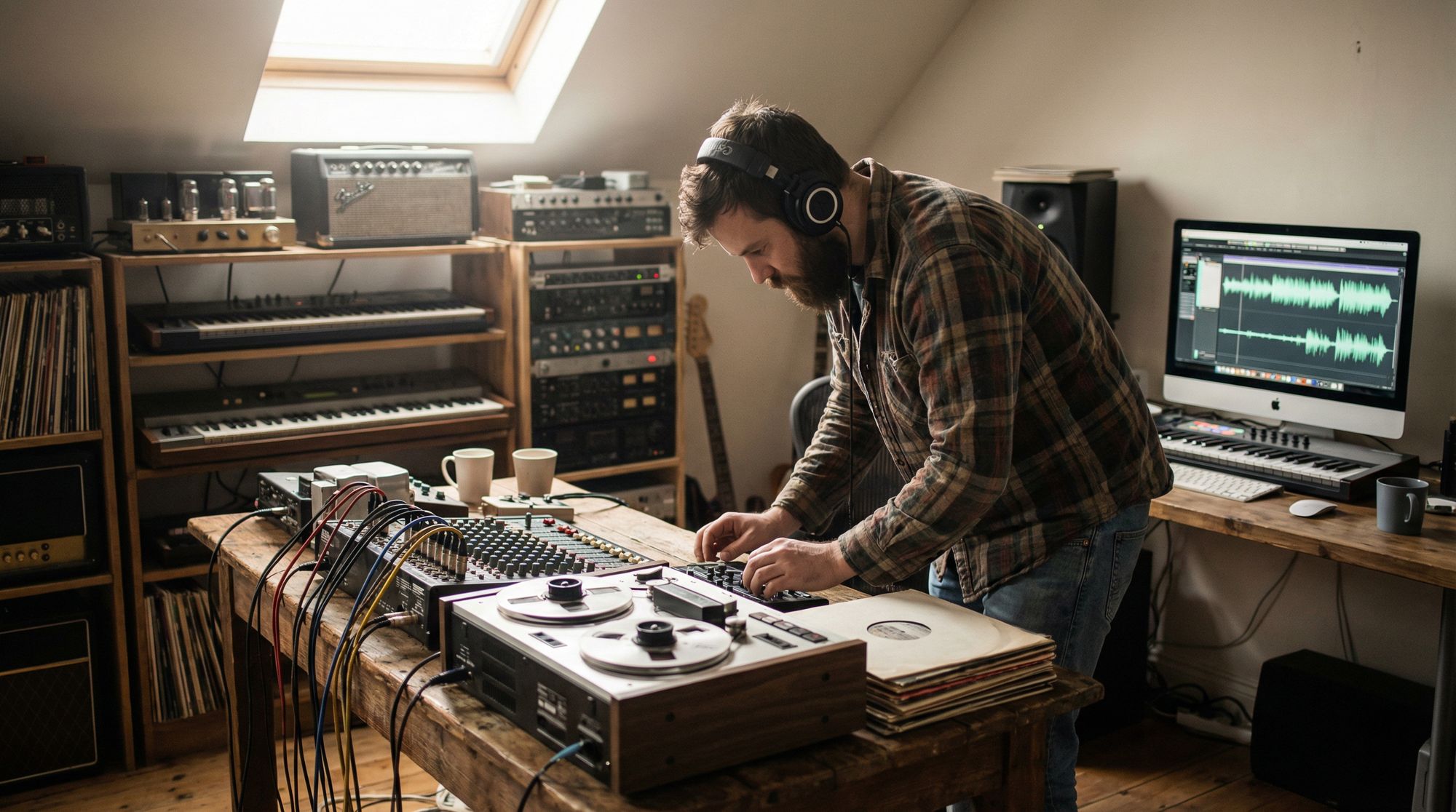
The music industry stands at an inflection point where AI music production tools tools are fundamentally reshaping how songs come to life. What once required thousands of dollars in studio time, specialized equipment, and weeks of post-production can now be achieved in hours using sophisticated algorithms and neural networks. This isn't theoretical disruption—87% of music producers already use AI tools in their creative workflows, signaling a seismic shift in how the industry operates.
The economics tell a compelling story. Traditional production routes—studio rental, session musicians, mixing engineers, mastering specialists, and marketing campaigns—can easily exceed $20,000 per track for professional-grade releases. Meanwhile, AI mixing mastering tools and generative platforms promise similar quality outputs at a fraction of the cost. But this efficiency comes with hidden tradeoffs that extend beyond dollar amounts.
Energy consumption adds another dimension to the comparison. While home studios consume relatively predictable power loads, the AI server power required for cloud-based music generation platforms operates at data center scale. Each AI-generated track draws computational resources equivalent to hundreds of search queries, raising questions about long-term sustainability that traditional methods never confronted.
As AI music production tools changess accelerates, artists and producers need clear-eyed analysis of both approaches. The following sections break down actual costs, energy metrics, workflow implications, and quality considerations to help you navigate this evolving landscape. Whether you're exploring AI-powered music creation or defending traditional production values, understanding these comparative economics is essential for making informed creative decisions in 2025 and beyond.
Traditional music production follows a multi-stage workflow that's been the industry standard for decades. It typically begins with pre-production planning, moves through recording sessions in professional studios, then advances to mixing and mastering before finally reaching the marketing phase. Each stage requires specialized equipment, trained professionals, and significant time investment.
The recording phase alone demands substantial resources. Professional studios consume considerable studio electricity running analog consoles, outboard gear, climate control systems, and high-powered monitors for extended sessions. According to industry analysis, traditional production requires coordinating multiple specialists—recording engineers, session musicians, mixing engineers, and mastering engineers—each commanding premium rates.
Financial costs compound quickly. Studio time averages $50-$200 per hour, with full production budgets for independent artists ranging from $5,000 to $50,000 per song. Mixing can add another $300-$1,500, while professional mastering typically costs $50-$200 per track. Marketing expenses—from promotional materials to distribution—often match or exceed production costs.
This reality explains why many emerging artists increasingly choose AI over studios for initial production stages. The traditional model's resource demands create significant barriers to entry, particularly for independent musicians working within tight budgets. While this approach delivers proven results and tangible creative collaboration, the cumulative investment in time, money, and energy presents practical limitations that newer technologies aim to address.
AI vs traditional music production methods production methods represent fundamentally different approaches to creating and finishing tracks. Where traditional workflows require manual intervention at every stage, music production automation now handles tasks ranging from drum programming to final mastering with minimal human input.
The adoption rate is staggering—87% of producers already use AI tools in their creative process, according to recent industry research. These tools span the entire production chain: algorithmic composition assistants, automated mixing plugins, intelligent mastering platforms like LANDR vs Waves mastering services (which blend AI efficiency with traditional processing quality), and even AI-powered marketing distribution.
The technology operates on machine learning models trained on millions of commercial tracks, enabling software to recognize patterns in frequency balance, dynamic range, and stereo imaging. This allows AI systems to make production decisions that historically required years of engineering experience.
However, the AI impact on music and art extends beyond convenience. While automation dramatically reduces both time and financial barriers to entry, it also raises questions about creative homogenization, the role of human intuition in mixing decisions, and whether technical accessibility might dilute the craft itself. The shift isn't simply about replacing humans with algorithms—it's about redefining what the production process means in practice.
Music production costs represent one of the most dramatic differences between traditional and AI-assisted workflows. A traditional single-track production can run anywhere from $2,000 to $10,000+ when you factor in studio time ($50-$500/hour), mixing ($300-$1,500), mastering ($150-$500), and session musicians. In contrast, AI-powered tools can reduce these costs by up to 70%, according to recent industry analysis.
into their workflows, using them for specific tasks like drum programming, vocal tuning, and reference mixing while maintaining human oversight for creative decisions.
However, when evaluating
The environmental footprint of AI music generation systems versus traditional production methods reveals surprising contrasts that extend well beyond simple energy calculations. Traditional studios require constant climate control, multiple power-hungry workstations, and physical transportation of artists and equipment—each session consuming resources whether anything gets recorded or not.
In contrast, low-cost music creation through AI platforms operates on shared cloud infrastructure that's optimized for efficiency at scale. According to DataArt, AI music production tools systems can process thousands of variations simultaneously on the same computational resources traditional workflows would need for a single iteration.
However, the environmental equation isn't entirely one-sided. Large language models and generative AI systems require significant energy for training—though once trained, inference costs drop dramatically. The key distinction: traditional studios waste energy continuously maintaining infrastructure, while AI music production tools savings concentrate energy use during active creation, not idle time.
Physical media production and distribution add another layer to traditional methods' environmental impact. Manufacturing CDs, vinyl, and promotional materials generates waste that AI-distributed music avoids entirely. The carbon footprint of shipping physical products to retailers dwarfs the minimal energy needed to stream or download digital files created through AI platforms.
What typically happens is that studios running 24/7 consume resources regardless of productivity, whereas AI tools scale their environmental impact directly with actual use—making them inherently more efficient for intermittent creators and independent artists.
The energy footprint of traditional music production methods extends far beyond the studio walls. A conventional recording session requires climate-controlled facilities running continuously, multiple high-powered computers processing audio, and outboard gear consuming electricity for days or weeks. The energy costs of traditional music mixing accumulate quickly when producers factor in HVAC systems maintaining optimal temperatures for equipment and musicians alike.
Music mixing costs traditionally include substantial energy overhead—professional studios often run equipment 24/7 to avoid power cycling that can degrade sensitive electronics. One mixing session might consume 50-100 kWh over several days, not counting the energy required for file transfers, backups, and client revisions.
AI-assisted workflows flip this equation entirely. Cloud-based AI tools process audio using shared server infrastructure that's optimized for efficiency at scale. What typically happens is that cost creating songs AI vs traditional methods shows dramatic energy savings—AI can generate and mix arrangements in minutes using a fraction of the power.
However, there's a caveat: AI's environmental advantage diminishes when creators produce more content simply because it's cheaper. The music video production costs and marketing efforts that follow still require traditional energy inputs, regardless of how the audio was created. The real sustainability gains come from strategic AI use, not just volume production.
Let's examine how different creators navigate the shift from traditional to AI-assisted workflows. A bedroom producer tackling music mastering costs might spend $150-300 per track with a professional engineer, but 87% of producers now use AI tools to handle initial mastering passes for under $30 monthly through subscription services. One common pattern is running AI mastering first, then selectively hiring engineers only for flagship releases—cutting annual mastering budgets by 60-70%.
For content creators needing background music, the traditional route meant either licensing tracks at $50-200 each or hiring composers at $500+ per custom piece. Today's scenario typically involves AI platforms generating music in minutes. A YouTube channel producing weekly videos saves roughly $2,400 annually while maintaining consistent quality.
The energy expenses old-fashioned vs AI calculation becomes tangible in podcast production. A traditional three-hour studio session consumes around 15 kWh between climate control, equipment, and post-production workstations. An AI-enhanced workflow—recording at home with AI noise removal and automated editing—drops this to approximately 2-3 kWh. For creators publishing bi-weekly episodes, that's 600+ kWh saved annually, translating to $75-120 in energy costs while eliminating studio rental fees of $3,000-6,000 per year.
However, these savings assume basic technical literacy and willingness to iterate with AI tools rather than expecting immediate perfection.
While AI tools slash musician hiring costs and production expenses, they're not a silver bullet. The technology stumbles with nuanced emotional performances—that subtle breath before a vocal phrase or the micro-timing variations that give tracks their human groove. A study tracking AI adoption found producers still spend significant time correcting AI-generated arrangements that lack musical context.
ROI music production calculations must account for hidden costs. You'll need time learning new platforms, subscription fees stacking up ($50-200/month across multiple tools), and potential re-work when AI outputs miss the mark. Many creators discover that hybrid workflows—using AI for initial ideas but human talent for final touches—deliver better results than full automation.
The quality gap matters for commercial work. When calculating traditional vs AI video costs, remember that clients paying premium rates expect polish that current AI struggles to deliver consistently. Background music for social content? AI works great. Lead vocals for a sync placement? You'll probably still need session singers.
The shift from traditional to AI-assisted music production represents a fundamental recalibration of how costs accumulate. Traditional workflows demand studio rental fees ranging from $50-$500 per hour, engineer compensation, and multiple revision cycles that stretch budgets thin. AI reduces music costs by compressing timelines—what once required weeks of studio time now happens in hours at your desk.
However, the human-crafted vs AI music debate isn't purely financial. Traditional production delivers irreplaceable emotional nuance and artistic interpretation, while AI excels at speed, consistency, and accessibility for creators without deep pockets. A recent industry analysis confirms that 87% of producers already integrate AI tools, suggesting the future lies in hybrid approaches rather than wholesale replacement.
The practical reality? AI slashes upfront production costs by 60-80%, but traditional methods still dominate when projects demand complex emotional performances or established artist credibility. Smart creators evaluate each project individually—using AI for demos, concept tracks, and rapid iteration, while reserving traditional production for releases where human touch justifies the premium investment.
The conversation around music production energy consumption rarely makes headlines, but it's reshaping how the industry evaluates costs. Traditional studios gulp electricity through HVAC systems maintaining precise acoustics, power-hungry analog gear, and computing clusters for processing. A single 12-hour recording session in a professional facility can consume 50-100 kWh – equivalent to running a household for several days.
AI-based production flips this equation. Cloud-based tools handle AI mastering a song using distributed server farms optimized for efficiency at scale. While data centers certainly consume energy, the per-track cost diminishes dramatically when infrastructure serves thousands of simultaneous users. What once required dedicated physical space and equipment now happens on a laptop drawing 65 watts.
However, traditional music production methods expenses included tangible assets musicians could resell – vintage compressors, microphones, mixing consoles. AI tools represent subscription costs that evaporate when payments stop, leaving no residual value. The environmental ledger becomes murkier when factoring in e-waste from constantly upgrading hardware to run newer AI models versus maintaining analog equipment for decades.
The real breakthrough isn't just carbon reduction – it's democratization. Bedroom producers in countries with unreliable power grids can now compete with major-label productions, provided they've got internet access. That geographic leveling matters as much as the kilowatt hours saved. The energy conversation ultimately circles back to access, efficiency, and whether sustainability metrics should weigh creative output against environmental cost.