
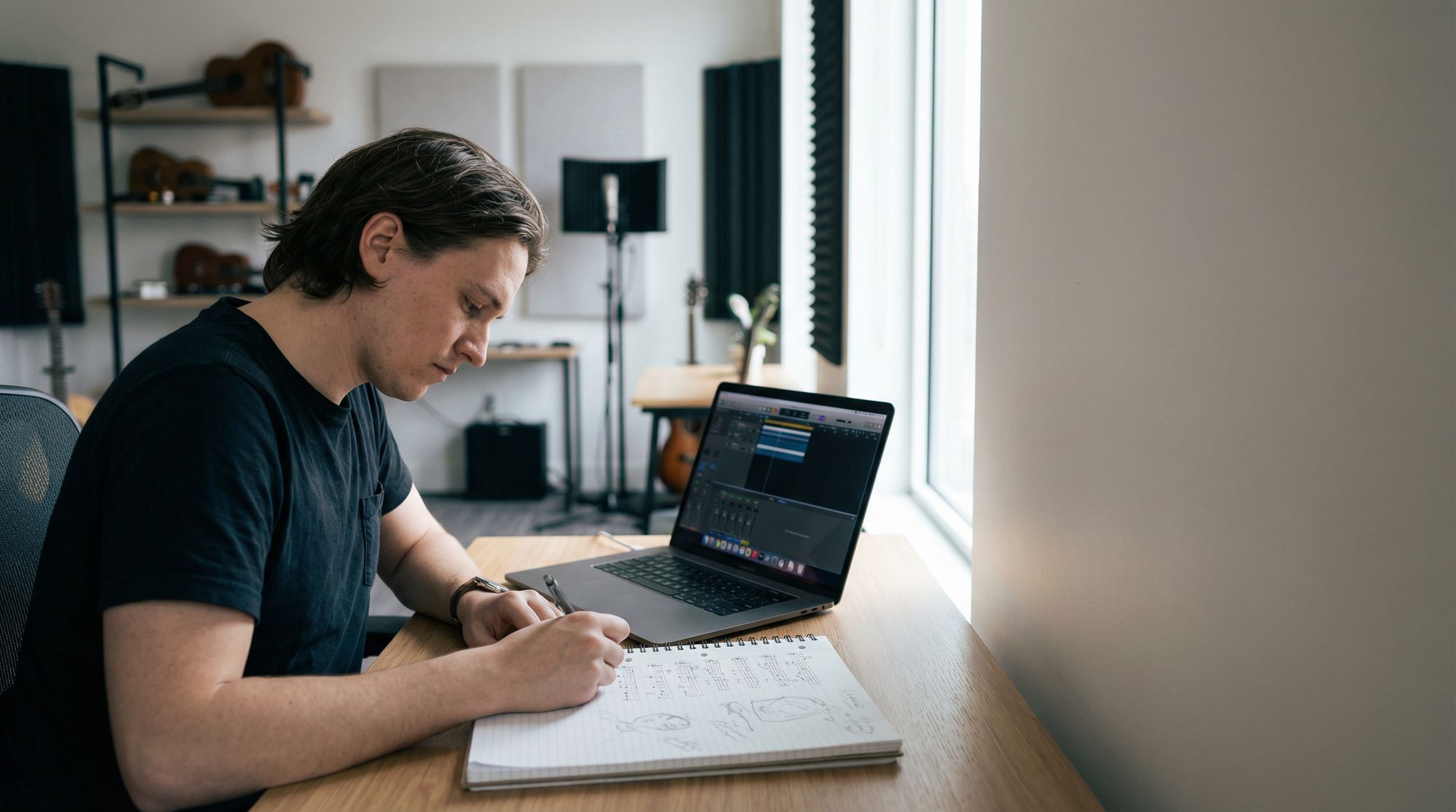
If you're searching for a Soundraw alternative or comparing AI music platforms, it's important to understand that SoundBreak.ai and Soundraw are designed for very different types of creators.
SoundBreak.ai is an AI-assisted songwriting platform where creators collaborate with AI trained on licensed artist styles to help develop original songs. The platform focuses on songwriting, music creation, and distributing songs to streaming platforms like Spotify, Apple Music, and YouTube Music.
Soundraw, on the other hand, is built primarily for generating royalty-free background music. It allows users to quickly create instrumental tracks by selecting genres, moods, and instruments from preset options.
The biggest difference comes down to workflow:
Choose
The core difference between SoundBreak.ai and Soundraw lies in how music is created.
SoundBreak.ai focuses on AI-assisted songwriting. Users collaborate with AI models trained on licensed artist styles to help develop musical ideas, lyrics, melodies, and arrangements.
Instead of simply generating background tracks, the platform is designed to help creators build full songs and explore new songwriting workflows using AI.
This makes SoundBreak particularly appealing to:
Soundraw takes a more structured approach to AI music generation.
Users generate music by selecting parameters such as:
The platform then produces instrumental tracks that can be adjusted using built-in editing controls.
Soundraw is widely used for background music generation for video content, podcasts, and commercial media projects.
Both platforms offer a variety of musical styles, but the type of music they generate differs significantly.
Because SoundBreak focuses on songwriting, it helps creators produce structured songs with melodies and arrangements influenced by licensed artist styles.
Users can experiment with different musical directions and refine songs as part of the creative process.
Soundraw specializes in instrumental background music across genres such as:
The platform allows users to generate multiple variations quickly, making it ideal for creators who need background music for content production.
One of the biggest differences between SoundBreak.ai and Soundraw is what happens after the music is created.
SoundBreak allows creators to release songs to streaming platforms through standard music distribution channels, including:
Creators can also submit songs to SoundBreak Radio, where the community listens and votes on tracks. Top songs may be shared with participating artists and their teams.
This creates a unique ecosystem for creating, releasing, and discovering new music.
Soundraw focuses on royalty-free licensing for media production.
Music created on Soundraw is typically used in:
Rather than releasing songs as standalone music tracks.
Pricing structures reflect the different audiences each platform targets.
Soundraw uses a subscription model with plans that provide unlimited music generation and royalty-free licensing for commercial use.
This model works well for content creators who need frequent background music for media projects.
SoundBreak operates on a subscription-based model that provides access to its AI songwriting tools and music creation features.
The platform is designed for creators who want ongoing access to AI-assisted songwriting workflows and music distribution capabilities.
Both SoundBreak.ai and Soundraw represent different directions in the rapidly evolving AI music landscape.
SoundBreak.ai focuses on AI-assisted songwriting, music creation, and distribution, helping creators develop songs and release them to streaming platforms.
Soundraw focuses on royalty-free background music generation for videos, marketing content, and commercial media projects.
If your goal is writing songs and releasing music, SoundBreak.ai provides the more suitable platform. If you need fast background music for content production, Soundraw is designed specifically for that use case.
When comparing SoundBreak.ai vs Soundraw, the fundamental difference comes down to creative goals:
Understanding that distinction makes it easier to choose the right AI music platform for your creative workflow.